Project Heartbeat

Education

A broad resource hub covering how healthcare professionals learn, train, and stay current. Topics span AHA guideline updates, training format comparisons, hands-on certification requirements, Magnet hospital status, and the case for continuing education throughout your career. If you’re trying to understand your options or make smarter decisions about your training, start here.

5 07, 2018

Did You Know that EMT is Turning 50 in 2019?

July 5th, 2018|Education|

EMT is turning 50 years old in 2019!! Did you know that the EMT role was first standardized in the late 1960’s? A paper commonly known as the “1965 white paper” was delivered to then President Richard Nixon. It demonstrated a number of concerning issues including: In 1965 the most common cause of death in the first half of life came from accidental injury. More people died from car accidents in 1965 alone than in the entire Korean Conflict. A [...]

27 06, 2018

Choosing Online and In-Person ACLS Courses with Project Heartbeat

June 27th, 2018|Advanced Nursing, Classes, Education|

They Are Both Excellent Courses, How Do I Choose? One of the most common questions we get at Project Heartbeat is, "How do I decide between Project Heartbeat's American Heart Association in-person ACLS or Project Heartbeat's American Heart Association Online ACLS course?"  While they are both great courses, one may be more suitable to your needs.  Here are some items to consider: 1. How Busy Are You?   Busy medics, nurses and doctors looking to revert their Advanced Cardiac Life Support [...]

20 06, 2018

Advance Your Career with an EMT Certification

June 20th, 2018|Career Programs, Classes, Education|

How Does Having an EMT Certification Help Your Career? For those new to medicine or the world of Emergency Medical Services (EMS) it may not be clear what a national certification as an EMT can do for your career.  Here are a few of the more obvious benefits: 1. Employers want candidates with real world experience. More and more candidates these days have one or more college degrees, but it also seems like fewer candidates these days have actual real-world [...]

13 06, 2018

Considering Becoming an EMT? Let Project Heartbeat Help!

June 13th, 2018|Career Programs, Education|

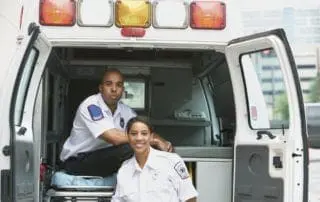
8 Great Reasons to Become an EMT! Emergency Medical Technicians (EMT's) are typically frontline first responders trained to render first-aid and emergency medical care to critically ill or injured patients.  EMTs make up the bulk of most ambulance companies and EMS agencies, including fire departments.  Additionally, EMTs are sought after by most emergency departments as well in the coveted role of ED Technician. Here are 8 great reasons to become an EMT: Dynamic Environment – If helping people and solving complex [...]

4 05, 2018

ER Nursing Skills: How to Access a Port-A-Cath, Video by Project Heartbeat President, Josh Burke

May 4th, 2018|Advanced Nursing, Education|

Project Heartbeat President/co-owner Josh  Burke RN MSN FNP has been a Kaiser Emergency Department Educator for over 15 years.  Throughout the years he has compiled a massive library of instructional videos that teach Emergency Department nursing skills.  See below for one of his videos on the proper technique for accessing a Port-o-cath. For additional content, like our Facebook page or tune in to our blog for regular posts on Emergency Department Nursing.  Project Heartbeat will soon be offering online content [...]

17 10, 2017

Register for our Basic ECG and Pharmacology or Advanced 12 Lead ECG Interpretation Classes! See below for class availability and information

October 17th, 2017|Classes, Education, Research|

Upcoming ECG & Pharmacology Training Dates The AHA’s ECG & Pharmacology Course has been updated to reflect the 2010 AHA Guidelines for CPR and ECC. This classroom-based, Facilitator-led course is designed to improve electrocardiogram (ECG) recognition skills and pharmacology knowledge for treating cardiovascular emergencies. This course is for healthcare professionals who participate in the management of cardiopulmonary arrest or other cardiovascular emergencies. This includes personnel in emergency response, emergency medicine, intensive care and critical care units such as physicians, [...]

Go to Top