How to Become a Phlebotomist in California in 2026: A Step-by-Step Guide
If you are interested in becoming a phlebotomist in California, you may be wondering where to start.
California has specific requirements for people who want to work as certified phlebotomy technicians. Completing a phlebotomy course is an important part of the process, but training is only one step toward becoming certified.
For many people entering the field, the goal is to become a Certified Phlebotomy Technician I (CPT I).
Here is an overview of the process.
What Is a CPT I?
A Certified Phlebotomy Technician I, or CPT I, is a California-certified phlebotomy technician who is qualified to perform specified blood collection procedures within the scope of California’s requirements.
The California Department of Public Health (CDPH) oversees phlebotomy certification through its Laboratory Field Services program.
California recognizes several phlebotomy certification levels, including Limited Phlebotomy Technician (LPT), Certified Phlebotomy Technician I (CPT I), and Certified Phlebotomy Technician II (CPT II).
For people beginning a phlebotomy career, CPT I is an important certification to understand.
Step 1: Make Sure You Meet the Basic Requirements
California’s requirements vary depending on an applicant’s education and previous phlebotomy experience.
For applicants pursuing the standard CPT I pathway, CDPH lists a high school diploma as an education requirement. Applicants must also complete the required training and practical experience.
If you are starting from scratch, completing an approved phlebotomy training program is generally the most straightforward place to begin.
Step 2: Complete a CDPH-Approved Phlebotomy Training Program
California requires applicants to complete their required training through a phlebotomy program accredited by the California Department of Public Health.
For the standard CPT I pathway, CDPH requires:
- At least 40 hours of basic and advanced didactic training
- At least 40 hours of clinical experience
- At least 50 venipunctures
- At least 10 skin punctures
- Observation of arterial punctures
The practical experience requirements are an important part of California’s phlebotomy training standards.
When choosing a school, make sure the program is included on CDPH’s list of approved phlebotomy training programs. CDPH states that it accepts phlebotomy training only from schools and programs listed by Laboratory Field Services.
Step 3: Complete Your Hands-On Training
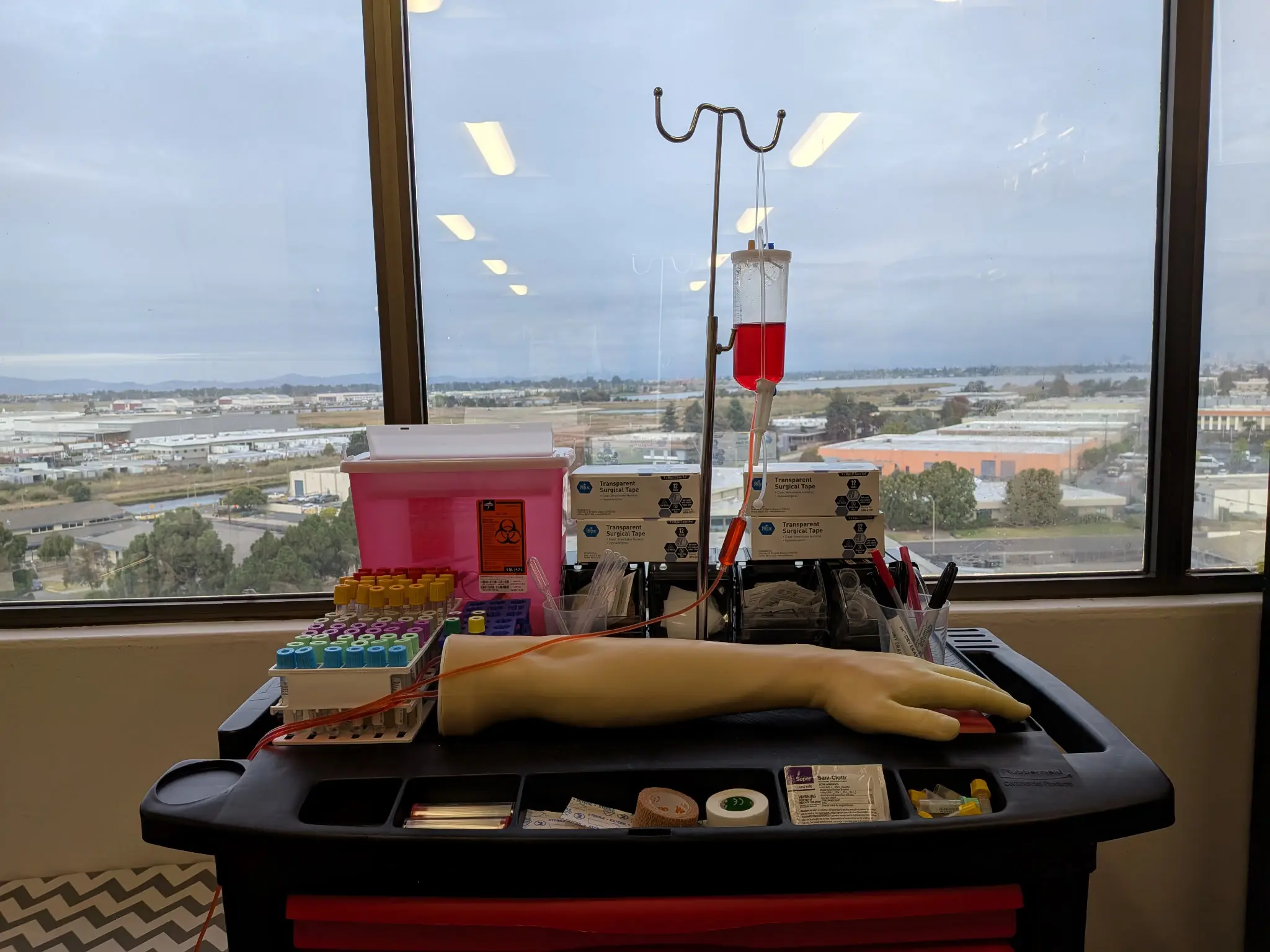
Phlebotomy is a hands-on healthcare profession, so classroom education is only part of the training process.
CPT I students must complete 50 venipunctures and 10 skin punctures, as well as observe arterial punctures.
Hands-on training gives students an opportunity to develop practical skills under appropriate supervision before entering the workforce.
This experience can also help students become more comfortable communicating with patients and performing blood collection procedures.
Step 4: Pass an Approved National Certification Examination
California requires CPT I applicants to pass a national certification examination from an organization approved by CDPH.
Current approved organizations listed by CDPH include:
- American Certification Agency (ACA)
- American Medical Certification Association (AMCA)
- American Medical Technologists (AMT)
- American Society for Clinical Pathology (ASCP)
- National Center for Competency Testing (NCCT/MMCI)
- National Healthcareer Association (NHA)
Applicants should verify current requirements with both CDPH and their chosen certification organization before registering for an examination.
Step 5: Apply for California CPT I Certification
After completing the required training, clinical experience and national certification examination, applicants can submit their certification application through the CDPH Laboratory Field Services online system.
CDPH states that applicants must upload required documentation, including their training certificate and proof of national certification, as part of the application process.
Because application requirements and procedures can change, applicants should review the current CDPH instructions before submitting an application.
How Long Does It Take to Become a Phlebotomist in California?
The answer depends on the training program and the individual’s circumstances.
For a new student following the standard CPT I pathway, California requires at least 40 hours of didactic training and at least 40 hours of clinical experience, in addition to the required blood collections.
Individual schools may structure their programs differently and may provide more training than the minimum required by the state.
The time needed to complete the entire certification process will also depend on factors such as class schedules, clinical training, examination scheduling and the processing of the state application.
What Is the Difference Between CPT I and CPT II?
CPT I is generally the starting point for someone entering the phlebotomy profession.
CPT II involves additional qualifications and expanded responsibilities. Among other requirements, CDPH’s CPT II pathway includes at least 1,040 hours of on-the-job phlebotomy experience within the previous five years and completion of 20 arterial punctures.
In other words, CPT II is not simply another name for entry-level phlebotomy certification. It represents a higher level of training and experience.
Why Choose an Approved Phlebotomy Program?
Choosing the right training program matters because California has specific requirements for phlebotomy education.
An approved program should provide the required classroom education and hands-on experience needed for the certification pathway.
Before enrolling, prospective students should verify:
- Whether the program is currently approved by CDPH
- What certification pathway the program prepares students for
- How clinical training is provided
- Whether required venipunctures and skin punctures are included
- What certification examination students are prepared to take
- How the program fits their schedule and career goals
Start Your Phlebotomy Career in California
Becoming a phlebotomist in California requires more than simply learning how to draw blood. Students need appropriate education, supervised hands-on experience, national certification and California certification.
For prospective students, choosing a California-approved training program is an important first step.
If you are considering a career in phlebotomy, researching the certification requirements before enrolling can help you choose a program that aligns with California’s current requirements and your career goals. Visit Project Heartbeat’s Phlebotomy Page to learn about our course offerings.
Certification requirements can change. The information in this article is provided for general educational purposes and should not be considered a substitute for reviewing current requirements directly from the California Department of Public Health.